


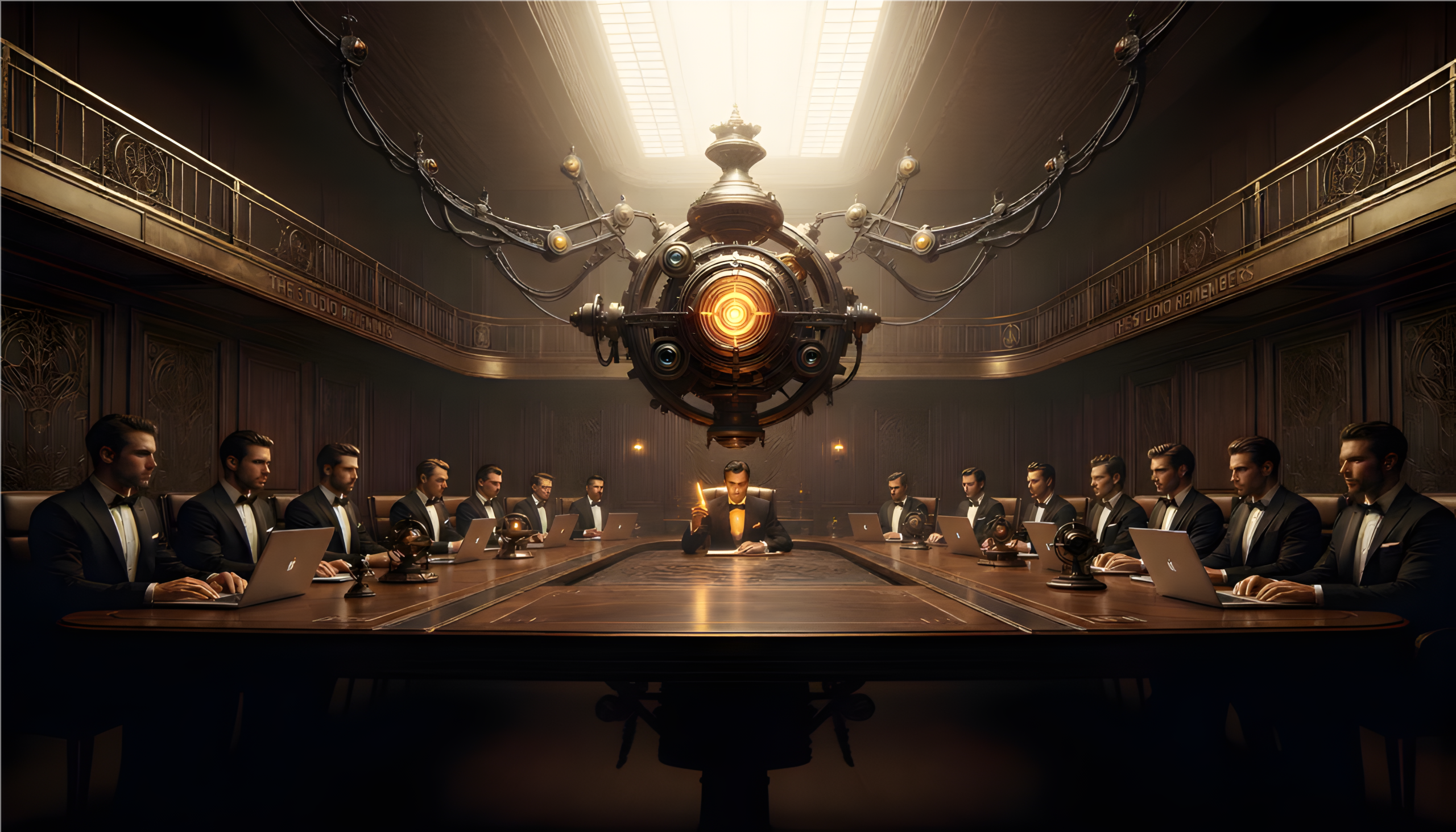
Earlier this year, major distributors slammed the door shut on AI-generated audio, projecting an image of fierce protection for human creators. Yet behind closed doors, major players such as Warner Music Group and BMG were quietly carving out backroom licensing arrangements, and distributors including Believe and TuneCore soon pivoted to reopen their portals to approved, walled-garden machine models. It is a striking display of institutional double-dealing, exposing a question that reaches far beyond music: who gets to own the value created by human culture?
For decades, artists, writers, musicians, photographers, filmmakers, and countless other creators have contributed to an enormous cultural commons. Our ideas build upon the ideas that came before us. Our music draws from the music that came before it. Our language, imagery, knowledge, and creative traditions are inherited, adapted, and passed forward. Human culture is cumulative.
Now technology companies are building increasingly powerful systems from enormous bodies of human-generated information and selling access to those systems back to the public through subscriptions and services. They own the infrastructure. The computing power belongs to them. Those commercial platforms belong to them. Still, the deep cultural knowledge responsible for these systems’ incredible power was largely produced by society long before these companies came into being.
This is what I now think of as trickle-up economics. Value flows upward. Humanity creates raw cultural wealth. Technology companies aggregate, process,N and commercialise it. The resulting systems are then packaged and sold back to us, often through another monthly subscription.
The people who created the underlying culture do not participate proportionately in the value created from it. That should concern all of us.
For independent musicians, the problem is becoming visible. The same industry that spent years telling artists that streaming would democratise music is now confronting an environment in which synthetic output can be generated at extraordinary scale. Earlier this year, major distributors slammed the door shut on AI-generated audio, projecting an image of fierce protection for human creators. Yet, behind closed doors, major players such as Warner Music Group and BMG have pursued licensing arrangements, while distributors including Believe and TuneCore have created pathways for AI-generated music.
For the self-releasing independent artist building a catalogue from their studios, the mechanism for this reconciliation can appear remarkably opaque: an opt-in checkbox sitting inside a distribution dashboard, potentially connected to training rights and commercial terms that the individual artist may struggle to fully understand.
The message can look rather simple. The technology is an existential threat until the people with the greatest economic leverage work out how to monetise it.
Once a licensing framework exists, the ethical panic becomes considerably quieter.
That leaves independent producers, beat-makers, and singer-songwriters caught in a peculiar squeeze. We are expected to compete in a streaming ecosystem increasingly flooded with synthetic output, while the broader technological economy continues to find ways of extracting value from the cultural material created by generations of human beings.
The question, therefore, isn’t simply whether AI should be allowed to exist.
It is how value should flow through an economy increasingly built around it.
The Human Dividend
This is where I believe we need to think beyond copyright battles, platform policies, and distribution checkboxes.
We need a Human Dividend. The principle is straightforward.
If technology companies can generate enormous economic value from systems built upon the accumulated knowledge, expression, and creative labour of humanity, then a proportion of that value should find its way back into the human creative ecosystem.
In music, that could mean creating a dedicated Artist Compensation Fund supported by revenue generated from wholly synthetic, algorithmically produced output.
The intention is not to prohibit AI. This is not an effort to regress. It’s undeniable that technology has a valid part to play in creation. We should acknowledge that technological advancements shouldn’t lead to the economic marginalization of those whose cultural contributions fostered the environment for their creation.
This distinction is significant.A musician using AI to explore an idea is still making human decisions. A producer using machine learning for sound manipulation still employs taste, judgment, and intention. When a songwriter uses AI, they retain full responsibility for their artistic decisions.
A more intriguing question arises regarding output that is almost entirely machine-generated, produced on an industrial scale, and involves minimal to no significant human creative input.
If thousands of such tracks can be generated, uploaded and monetised primarily through volume, why should that additional synthetic supply simply dilute the economic pool available to human creators?
The Human Dividend offers one possible answer.
But who is human?
The troublesome part is not the principle. It is verification.
How do we distinguish a human-authored piece of work from something generated almost entirely by an algorithm?
This is precisely why will.i.am’s proposal for a .pol file, or “Proof of Life” file, deserves serious consideration. The underlying idea is powerful because it shifts the conversation away from declarations of authenticity and toward evidence of creative provenance. Just as an audio file can carry information about its format, sample rate, track title, and ISRC, a proof-of-life system might establish a verifiable record of how a piece of work came into existence.
A DAW session could contain evidence of human performance. MIDI data could establish a sequence of decisions. Recorded audio could preserve physical takes. Hardware inputs could document an analogue signal path. Revisions, edits, and stems could create a chronological trail through the creative process.
None of these things would make creativity mathematically measurable. They would simply provide evidence that a human being had been there. And that distinction may become increasingly important.
Proof of Life
A genuine proof-of-life standard should not belong only to the companies that distribute or monetise creative work. If the same organisations that benefit financially from synthetic abundance are responsible for determining what constitutes authentic human creation, there is an obvious conflict of interest. Any meaningful standard should therefore be open, transparent and independently governed. Artist cooperatives, independent rights organisations, and transparent governance structures could have a role in determining eligibility and maintaining standards.
The technology could include session-level cryptographic records, decentralised metadata registries and verifiable creative lineage. The important word is verifiable.
Not a badge. Not a marketing label. Not another checkbox that asks the artist to trust an institution they cannot see.
Evidence.
To understand what this looks like in practice, consider how a verifiable lineage could work for an actual release. When building a track under Phraktal or AXIS Audio, whether it is a sci-fi-inflected melodic house piece or an archival restoration from 1996, the session leaves a distinct digital footprint long before it reaches a distribution portal. A genuine proof-of-life standard would capture that physical reality: the raw DAW session containing original MIDI performance data, the physical instrument inputs, the specific analogue signal-path characteristics, and the exported stems that trace a chronological path through the creative process.
Instead of asking artists to blindly trust a distributor’s dashboard, this cryptographic record would tie the track to its documented origin. Standard metadata, including an ISRC, the unique tracking code assigned to a commercial recording, could then anchor the release within that provenance chain, connecting the finished work to the evidence of its human creation.
The Great Correction
I believe we are entering what I call The Great Correction.
It is not a reactionary backlash against technology. It is not a rejection of innovation. It is the inevitable rebalancing of an ecosystem that has mistaken infinite volume for infinite value.
For listeners, that may mean becoming more conscious of provenance. When almost anything can be generated instantly, the circumstances behind a piece of music become more meaningful, not less.
For artists, it means recognising that decades spent learning synthesis, engineering, arrangement, performance, listening and musical judgment are not obsolete simply because a machine can imitate the resulting sound.
A machine can reproduce the waveform.
It cannot inherit the life that produced the decision.
Technology can refine a sound. It can speed up a workflow. It can illuminate possibilities. But it cannot choose a frequency for emotional reasons. It cannot decide to leave a mistake in because it feels right. It cannot understand why a particular chord progression belongs to a particular memory, or how a single patch can process a decade of grief.
That is the difference.
When I think about my own work under Phraktal and AXIS Audio, I see that distinction everywhere. The NANOHACKERZ universe, the restoration of recordings dating back to 1996 and 1997, the sci-fi-inflected melodic house, the experiments that became finished productions, and the mistakes that somehow became part of the music all carry traces of lived experience.
They are not simply files.
They are evidence of a life spent making them.
That is what creative provenance really means to me.
It isn’t just a technical record of where a piece came from. It is the history embedded within the decisions that made it what it became.
Who Owns the Future?
The debate surrounding AI is often framed as a battle between humans and machines. I think that is too simplistic.
The real question is economic. Who benefits when human culture becomes machine-readable? Who owns the infrastructure? Who captures the revenue? Who gets to decide what counts as valuable? And what happens to the people who continue to create when the cost of producing synthetic content approaches zero?
If we accept a future in which machines generate limitless cultural output, then we need to become much more deliberate about protecting the conditions in which humans can continue to create. Otherwise, we risk creating an extraordinary paradox: the machines become increasingly capable because they have absorbed the accumulated achievements of humanity, while the humans who continue generating new culture struggle to make a living within the economy those machines are helping to create.
That isn’t technological progress by itself. It is a distribution problem. And distribution problems can be redesigned.
The Human Dividend is my attempt to imagine what that redesign might look like. Not a tax on technology. Not a war against AI. It is a recognition that human creativity has value, that cultural knowledge has a lineage, and that the people who continue adding to that lineage deserve a meaningful stake in the economy built around it.
For thirty years, I have watched technology change the way we make music. I’ve watched hardware become software, studios become laptops, physical distribution become streaming, and music become increasingly detached from the objects and places that once contained it.
Yet the fundamental act has remained remarkably stable.
Someone sits down. Someone listens. Someone makes a decision. Someone changes a sound because something inside them says it should be different.
That moment is still human. And perhaps, as machines become better at generating everything else, that moment will become the thing we value most.
Machines store data. Studios store lives.
The studio remembers.